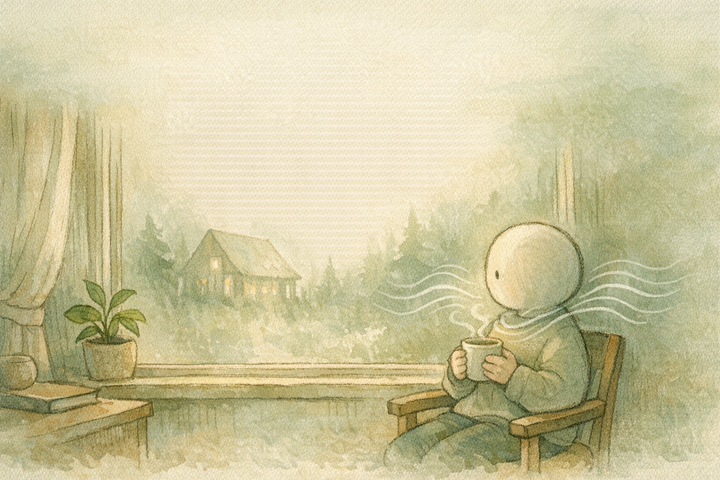
Tamas as Teacher

You've noticed it by now.
The heaviness that settles in around mid-December. The way mornings feel thicker, slower to start. How the body wants rest it hasn't earned by the usual metrics—more sleep, more stillness, more nothing.
And probably: the quiet guilt that follows.
The default response is familiar. More caffeine. More light therapy. More willpower. More internal lectures about discipline, about not letting the season win, about staying productive when every cell is asking for pause.
We treat winter sluggishness as a bug to fix. A malfunction in the system. Something wrong with us that needs correcting.
But what if the slowness is the message?
Ayurveda calls this quality tamas—heaviness, inertia, the energy of rest and ground. In winter, tamas rises. The days contract. The light withdraws. And something in us follows, if we let it.
The problem isn't tamas. The problem is that we've been taught to override it.
Fighting the season is swimming against a current that will be there whether we acknowledge it or not. The body knows what the calendar denies.
So what does it look like to work with tamas instead of against it?
Not collapse. Not abandoning responsibility. But adjusting the container to match the season.
Slower mornings. The body needs more transition time in darkness. Five minutes of stillness before the phone. Coffee without the scroll.
Earlier evenings. Honor the early dark. Wind down when the light does, even if it feels absurdly early. The body is following a rhythm older than electricity.
Less output, more maintenance. Winter is for tending what exists—not building new. Reduce the expectation of forward momentum. Some seasons are for holding ground.
Rest that doesn't need earning. This is the hard one. Rest because the season asks for it, not because you've exhausted yourself enough to deserve it.
None of this is easy inside a culture that runs on constant output. The forces that make rest hard are real—work demands, family needs, financial pressure, the internalized voice that equates stillness with failure.
I'm not pretending those forces don't exist.
But I am asking: what's the cost of fighting the season? Of arriving at spring depleted because we refused to slow when the body asked?
Your winter slowness isn't a bug. It's the season working correctly.
Not a problem to solve. A rhythm to follow—as much as you can, in whatever small ways are available.