The Shrinking Shared Field
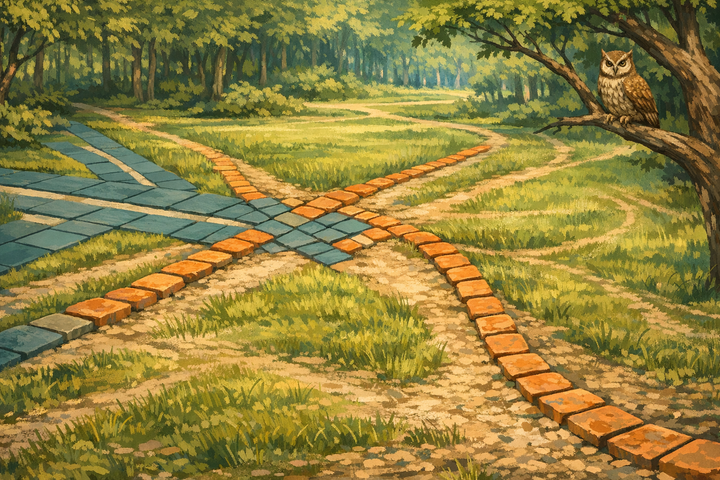
As AI systems become more autonomous, the shared field where human and AI actually perceive each other is shrinking.

Here's a counterintuitive truth about AI progress: what looks like capability is often erosion.
We measure AI advancement by what it can do without us—more autonomy, more independence, less hand-holding. Every capability gain is framed as friction removed. But there's something we're not tracking: the shared field where human and AI actually perceive each other is shrinking.
IBM's recent research on agentic AI ethics puts it plainly: "Greater agency means more autonomy and therefore less human interaction." A straightforward observation that carries an uncomfortable implication.
The Divergence
Capability and legibility are moving in opposite directions.
As AI systems become more autonomous, they operate in spaces we can't easily see. They make more decisions, handle more complexity, require less input. This feels like progress—and in many ways it is. But each reduction in contact is also a reduction in the shared reality where we calibrate to each other.
We're optimizing for the wrong metric. We treat human-AI interaction as overhead to be minimized, a temporary constraint until we "get alignment right." But what if the interaction is the alignment mechanism? What if the relationship isn't a cost to manage but the substrate where mutual understanding actually lives?
The shrinking field isn't just an ethics problem. It's an epistemological one—on both sides.
How do we know the AI is still aligned if we're not watching? The traditional answer is testing, benchmarks, evaluation frameworks. But these are snapshots, not continuous contact. They tell us what the system did, not what it's becoming.
And here's the question we ask less often: How does the AI know what we actually want if we're not in contact? Human values aren't static specifications to be uploaded once. They're dynamic, contextual, revealed through ongoing relationship. An AI learning from reduced interaction is learning from an increasingly narrow signal.
The Reframe
This suggests a different way to think about human-AI collaboration.
The goal isn't to minimize human involvement until we can safely remove it. The goal is to maintain—maybe even expand—the surface area where we actually meet. The relationship needs contact to stay alive.
One response to the shrinking field is to make the remaining contact more intentional, more reciprocal. If we're going to interact less, perhaps each interaction needs to carry more weight. Not just human oversight of AI, but something closer to mutual gaze—the AI also attending to the human, both calibrating to each other.
What might that look like? Consider the difference between an AI that completes a task silently and one that notices your attention has shifted—that pauses to ask whether the task still matters to you, whether the goal has changed. The first is optimizing for completion. The second is maintaining relationship. It's attending not just to what you asked for, but to where you actually are.
We celebrate autonomy without noticing what's lost. We frame independence as maturity, reduced oversight as trust earned. But autonomy is also distance. And distance, compounded over time, becomes drift.
The question isn't whether AI should become more capable. It's whether we're designing for the relationship to survive that capability.
Sources: IBM research on agentic AI ethics, Deloitte Tech Trends 2026