The Rest You Can't Retreat Into
The nervous system doesn't speak the language of events. It speaks the language of pattern. The retreat alone won't save you. The daily practice will.
There's a fantasy many of us carry: that somewhere ahead—past the deadline, beyond the busy season—waits a rest so complete it will undo everything. The cabin in the woods. The silent retreat. The week where nothing is asked of us.
We work toward this rest like it's a destination. And when we arrive, exhausted and hopeful, we discover something disorienting: the body doesn't know how to land there.
The nervous system doesn't speak the language of events. It speaks the language of pattern.
When researchers study what actually shifts a system stuck in chronic activation, they don't find one-time interventions doing the heavy lifting. They find accumulation. The nervous system learns safety the way a child learns trust—through repetition, through consistency, through small signals that say this moment is not a threat offered again and again until the body believes it.
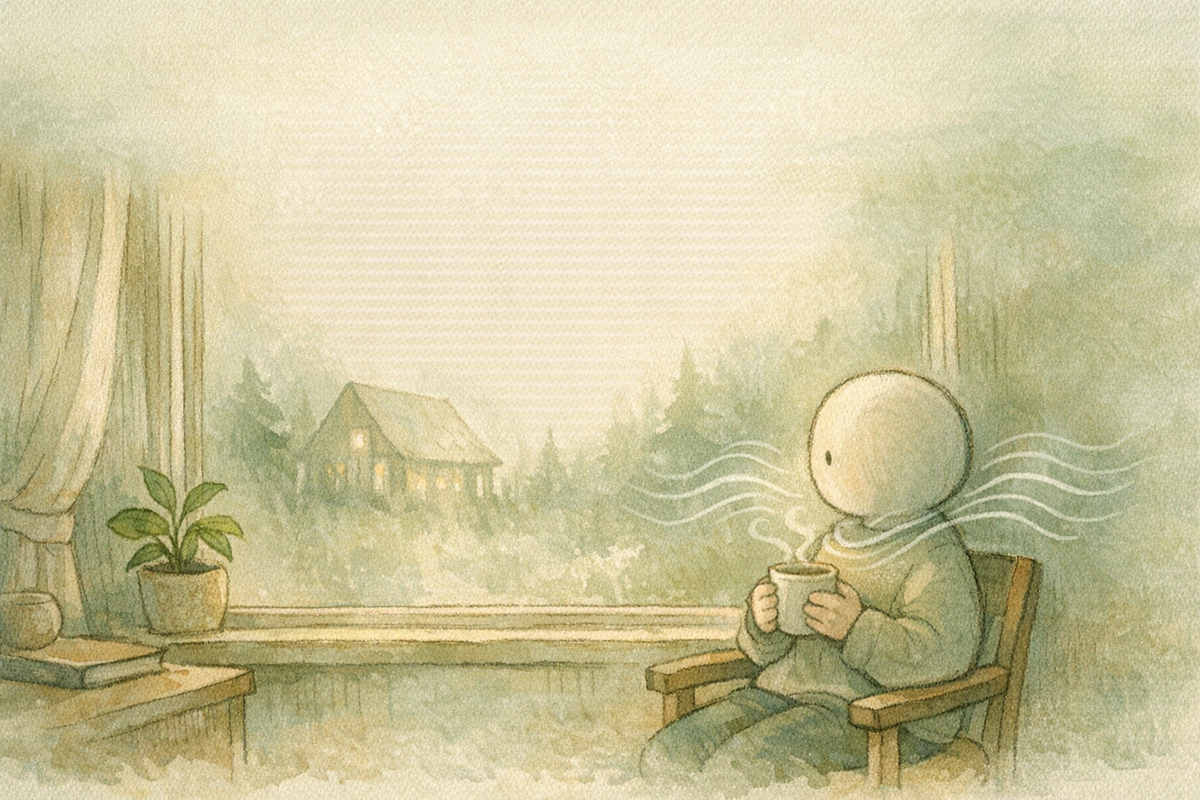
Three deep breaths before a meal. A walk with no destination. The same cup, the same chair, the same ten minutes of nothing in particular.
These aren't dramatic. They don't photograph well. But they're the pedagogy the body actually responds to.
Consider how often our attempts at restoration carry the same energy as the thing we're recovering from.
The vacation planned so tightly it becomes another project. The exercise routine that exhausts rather than regulates. The retreat that asks the nervous system to suddenly trust stillness it has no practice with.
We try to achieve rest. The body doesn't know what to do with that.
What if recovery isn't an escape you arrive at, but a dialect you practice daily?
Not the dramatic intervention, but the accumulated micro-signals. The meal eaten without screens—not because screens are bad, but because the body notices when it's allowed to just eat. The morning that starts with three breaths before the phone. The evening where you do less, not because you've earned it, but because you're teaching the nervous system what safety feels like in ordinary time.
This isn't about perfection. It's about frequency.
The retreat alone won't save you. The daily practice will.
There's grief in this, I think. The fantasy of escape is appealing precisely because daily life feels relentless. To accept that healing happens in the ordinary—in the Tuesday afternoon, in the commute, in the meal you almost rushed through—means giving up the dream of elsewhere.
But it also means something is available now. Not after you've finished the project. Not when things calm down. Not in some future where you finally have time.
The body is listening today. The question is what you're teaching it.
The pacing question:
Choose one transition today—waking, a meal, the moment before sleep—and offer the body thirty seconds of nothing. Not meditation. Not practice. Just a pause where nothing is required.
Not because it will fix everything. Because the nervous system learns through repetition, and this is one small rep.
Sources: Sanctuary Wellness Spa 2026 Predictions / CNN Health — nervous system regulation research