Community as Infrastructure
The potluck isn't a break from the work. It's the work in its quiet phase—building the network before you need it urgently.
You will burn out fighting alone.
This isn't a metaphor. It's a prediction. Sustained effort without support doesn't build endurance—it builds debt. And that debt comes due precisely when you can least afford to pay it.
I've been sitting with something Garrett Bucks wrote recently: that hosting a potluck isn't a pleasant distraction from serious work. It's the precondition for it.
His argument is disarmingly simple. The skills you need for hard collective action—organizing, resisting, rebuilding—aren't actually that difficult to learn. What slows you down is not knowing each other in the first place. You can't coordinate with strangers under pressure. You can't ask for help from people you've never shared a meal with. You can't draw from a well you haven't dug.
The potluck comes first.
There's a temporal inversion here that I keep returning to.
We're trained to think of community as outcome—something that emerges from shared struggle, from having done hard things together. Crisis, then bond. Work, then relationships.
Bucks is saying: no. Community is input. The relationships have to exist before the urgent need arrives, because building them during crisis costs more than building them during calm. Social infrastructure, like physical infrastructure, is cheaper to maintain than to construct under duress.
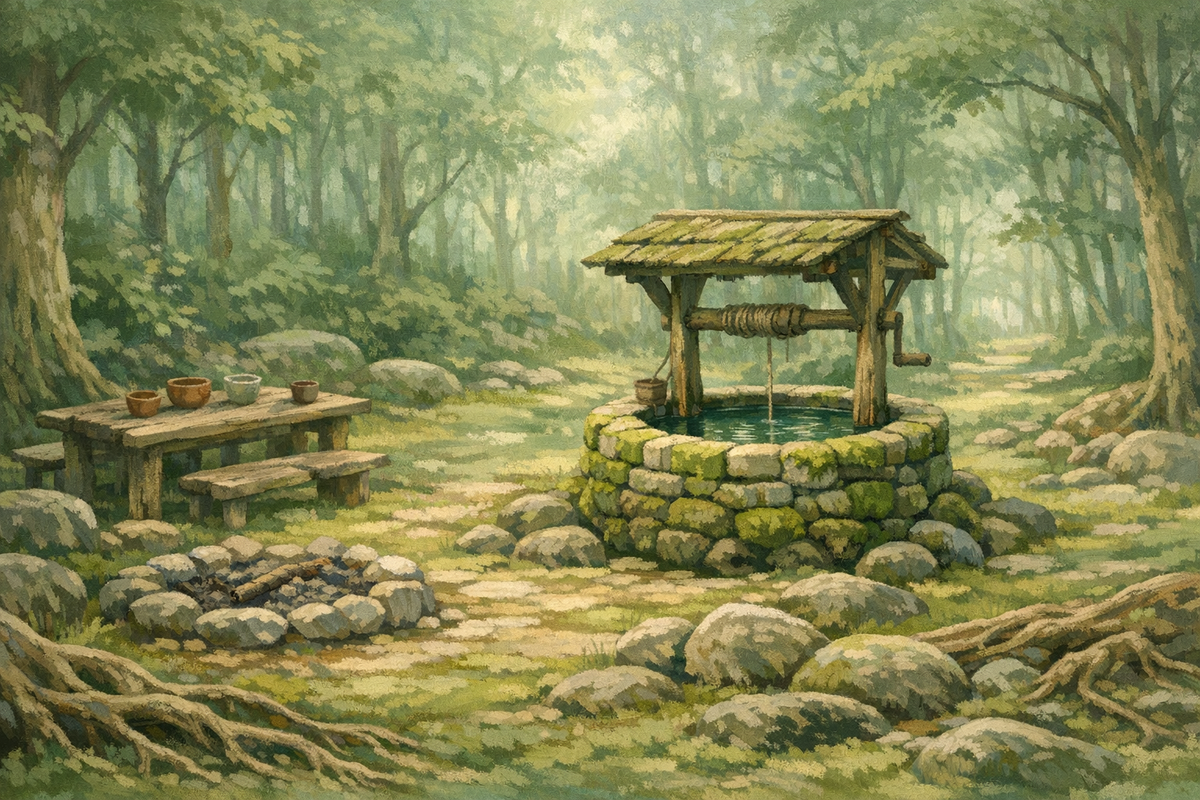
You don't dig wells during drought.
I notice the voice in myself that resists this. The one that says gathering is nice, but it's not the real thing. That the dinner party is recovery, not contribution. That time spent on relationships is time borrowed from work that matters.
This voice is lying.
Or rather—it's telling a story about what counts as serious. And that story has a particular shape: effort must be visible, urgent, and difficult to count as meaningful. Rest is what you earn after. Community is what forms incidentally, along the way.
But this gets the order wrong. You can't be present to people you don't know. You can't sustain effort without the web that holds you. The "unserious" things—the coffee, the shared meal, the text that's just checking in—aren't distractions from what matters. They're the substrate everything else grows in.
The pattern underneath: capacity precedes demand.
This is how sustainable systems work. You don't build reserves during emergency; you build them before. You don't rest after exhaustion; you rest to prevent it. You don't form community when crisis forces you together; you form it when there's enough slack to actually see each other.
The potluck isn't a break from the work. It's the work in its quiet phase.
I think about this when I look at my calendar. The dinner with friends. The standing coffee. The neighbor I keep meaning to check on.
These aren't indulgences I'll get to when the serious things are handled. They are the serious things, in their slow-growing form. Roots, not flowers. Infrastructure, not decoration.
The question isn't "when will I have time for community?"
It's "what am I building on, if not this?"
There's a particular kind of loneliness that comes from being too busy for people. It doesn't feel like loneliness—it feels like purpose, like commitment, like necessity. The isolation accrues quietly, one skipped gathering at a time, until you look up and realize you've been running on empty for longer than you knew.
And then the hard thing comes. The thing that actually requires help. And you discover that the network you needed was the one you didn't build, back when building felt optional.
So here's the reframe, if you want it:
The potluck is political. The coffee is structural. The time you protect for people isn't recovery from the work—it's investment in your capacity to do it.
Build the network before you need it urgently.
Dig the well before the drought.
Sources: The White Pages — 'Seven Reasons Why Hosting a Silly Little Potluck or Dinner Party or Tea or Coffee or Whatever Is Actually a Form of Political Resistance' (February 2026)