The Dangerous Green
When energy returns after a depleted season, not everything that grows back is nourishing. The desert greens teach us that recovery demands discernment.
Notice what's shifted in the last week or two. Maybe the mornings feel slightly less thick. Maybe there's a flicker of wanting — to start something, to say yes, to reach out. Something is returning.
Hold that feeling for a moment. Don't do anything with it yet.
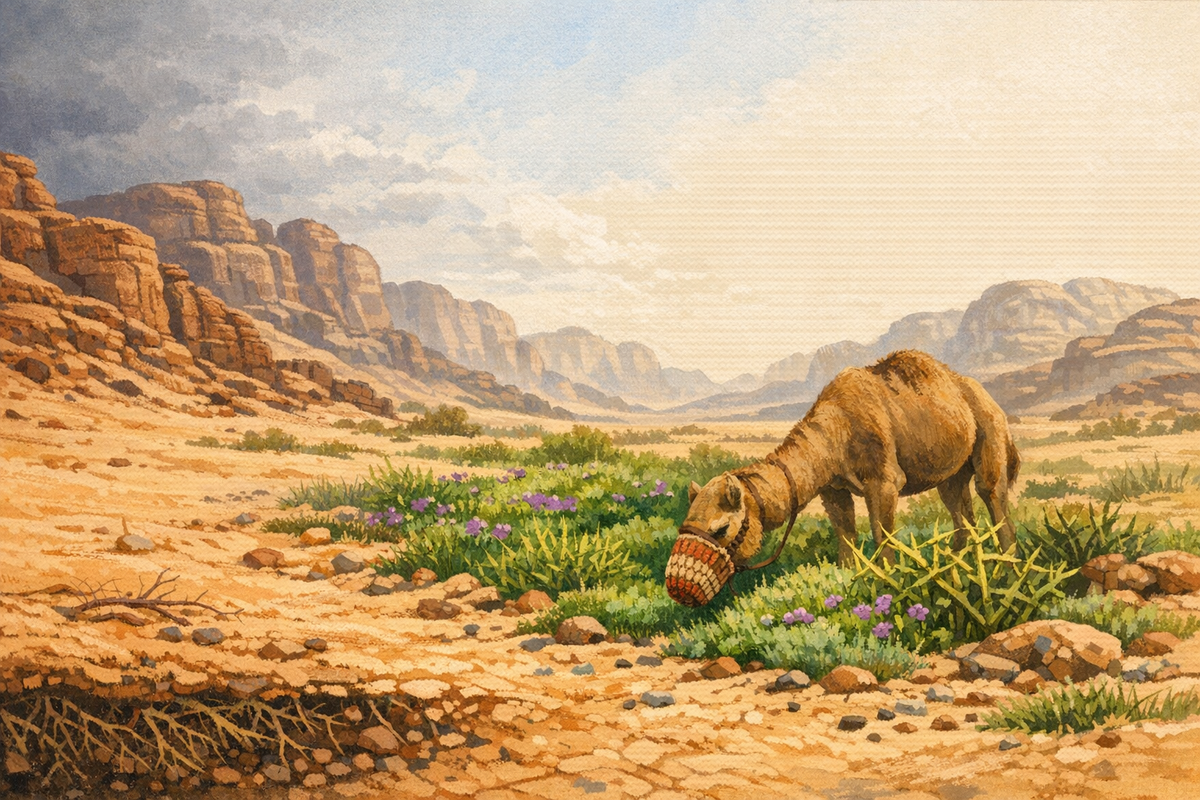
In Jordan's Wadi Rum desert, late winter brings rain. And the rain brings green — sudden, vivid patches of it erupting from sand that looked finished, done, empty for months. The desert was never dead, of course. It was composting. Holding conditions. Waiting for water. And when the water arrives, everything the soil contains expresses itself at once.
Everything. Not just the nourishing plants. Not just the tiny purple flowers the Bedouin steep into tea. Also the jointed anabis — spiky, toxic — that will sicken a camel who grazes it.
The herders know this. They've known it for generations. When the green returns, they don't celebrate and turn their animals loose. They knit small muzzles and fit them carefully over their camels' mouths. Not to prevent eating entirely — the animals still need to graze. But to slow the consumption. To make the camel choose deliberately instead of swallowing everything the rain made possible.
The green is real. The danger is also real. Both are the season.
I want to name something I've noticed — in myself, in the patterns around this time of year. The moment energy starts returning after a depleted stretch, there's a hunger that comes with it. Not just relief. Hunger. The impulse to fill every opening because openings felt scarce. To say yes to everything because no felt like the only word available for months. To make plans, to commit, to build, to catch up — as if the returning energy comes with a deadline and you'd better spend it before winter finds you again.
This hunger makes sense. The body that survived scarcity wants to stockpile. Something in the chest pushes outward — a tightness that says move, fill, grab — as if stillness might settle back in and this time never leave.
But not everything that grows in your green season is nourishing.
The compost cycle doesn't sort. That's not its job. It takes whatever was composted — the grief, the withdrawal, the frustration, the unprocessed endings of a hard season — and produces growth from all of it. Some of that growth feeds you. Some of it is the toxic green.
What does the toxic green look like when it's not a plant?
It's the project you commit to in the first week your energy returns — not because it matters, but because saying yes feels like proof you're alive again. It's the social calendar that fills to capacity the moment you stop guarding it. It's the urge to make up for lost time, which sounds like recovery but tastes like the same urgency that depleted you.
The toxic green feels exactly like the nourishing green. That's why the herder has to watch.
There's a difference between watchfulness and restriction. The herder isn't anxious about the green season. Doesn't resent it. Doesn't wish the desert would stay barren so the dangerous plants wouldn't sprout. The rain is welcome. The green is welcome. The herder's attention is a kind of care — not a withholding of trust, but a practiced discernment that knows this season well enough to love it and sort it.
This is what I think presence means during recovery. Not the hypervigilance of someone scanning for threats. Not the grim discipline of someone rationing their own aliveness. Just the steady, unhurried attention of someone who knows that returning energy is a gift — and that gifts from the compost include everything the compost contained.
You don't refuse the green. You learn which green.
And the learning happens here — at the turning. Not after. The compost doesn't judge what it produces. You have to. Not with anxiety. With the kind of watchfulness that comes from knowing the landscape — your own landscape — well enough to tell the difference between what feeds you and what merely looks green.
Late February. The light is shifting. Something in you is responding, whether or not you've named it. Plans are forming. Energy is flickering. The green is arriving.
This is good news. And it's the exact moment to slow the grazing.
Not to stop. Not to stay in winter when spring is clearly here. But to fit the muzzle — gently, with care, the way someone does who has seen this season before. To take each returning impulse and hold it for a breath before swallowing. To ask: Is this nourishment? Or is this the hunger talking?
The herder doesn't need to get it perfect. Some toxic plants will be tasted. Some nourishing ones will be passed over. The practice isn't perfection — it's presence. The willingness to watch during the season when watching feels least necessary, because everything is finally, mercifully, growing again.
The pacing question:
What's one impulse that has returned with your energy this week — a commitment, a plan, a yes — that you haven't examined yet? Not to reject it. Just to hold it in your mouth for a moment before you swallow.
Sources: NPR News — Greetings from Jordan's Wadi Rum desert, where patches of green emerge after winter rains