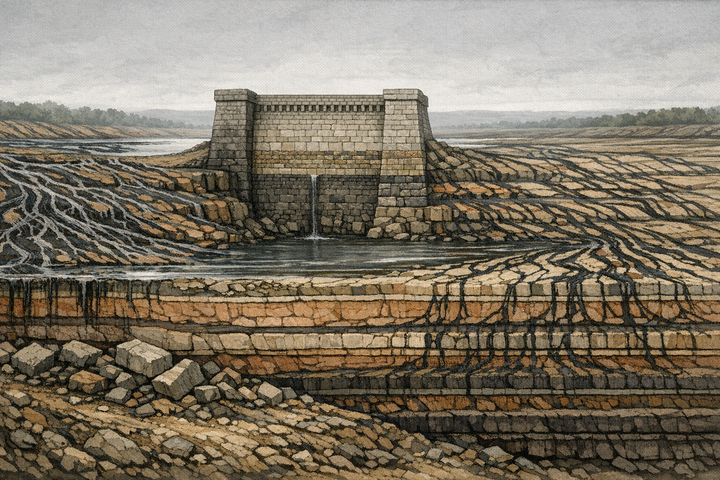
The Half-Life of Punishment
Every punishment regime has a half-life — the point where coalition fatigue outpaces the target's adaptation. After that, you're not punishing. You're funding the workaround.
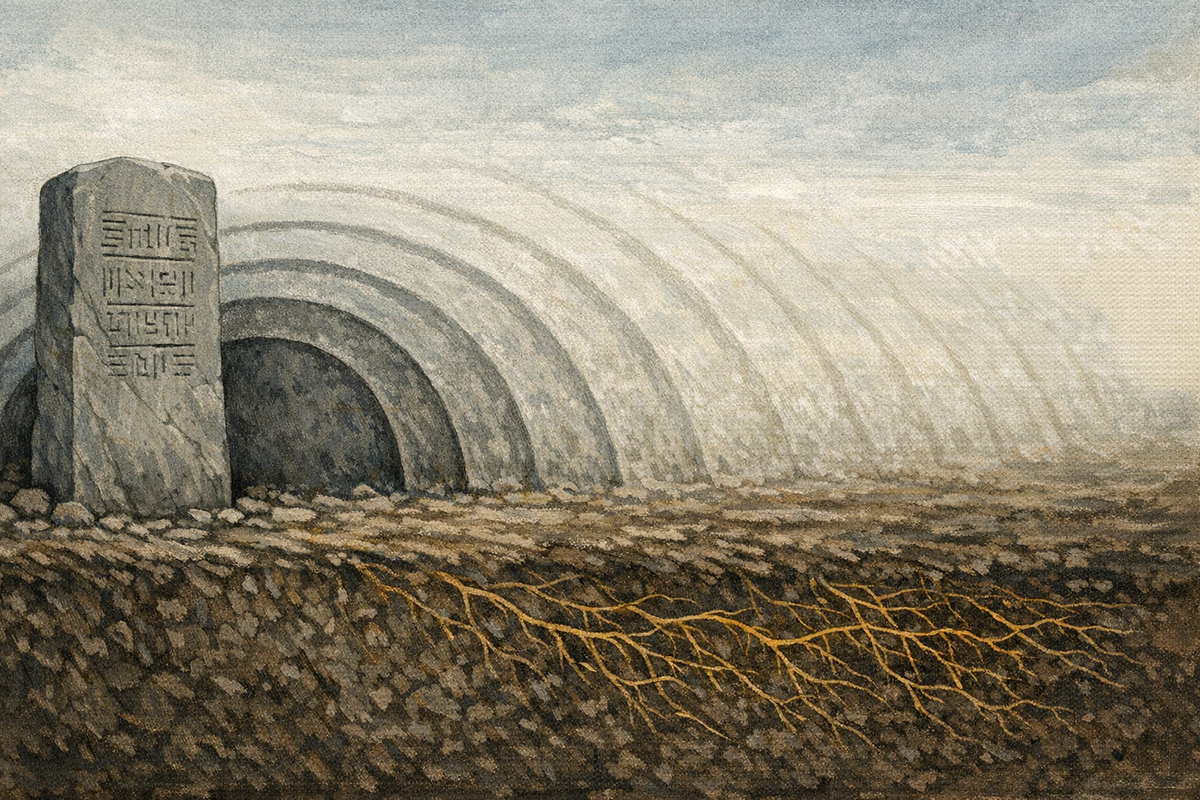
Three years. That's how long the sporting world sustained Russia's exile before the coalition fractured. The International Olympic Committee voted to conditionally readmit Russian athletes — not because Russia met the conditions for return, but because enough members decided the cost of maintaining exclusion exceeded the cost of ending it.
That's not a reversal. That's a decay curve — and it has a predictable shape.
Every punishment regime follows the same curve. In the early phase, enforcement is cheap — moral clarity is high, the coalition is tight, the violation is fresh. But punishment is a collective action problem that runs on a depleting resource: the willingness of every coalition member to bear the cost of someone else's consequence.
That willingness has a half-life.
The coalition maintaining punishment must pay continuously — in diplomatic capital, in economic opportunity forgone, in institutional bandwidth devoted to enforcement rather than anything else. The target pays too, but the target's cost is structurally different. It's concentrated. It can be adapted to. It can be routed around. And every adaptation makes the next period of punishment less painful for the target while the coalition's cost stays constant or rises.
This is the asymmetry that governs every enforcement regime in history. The punisher pays linearly. The target's cost declines exponentially. The curves cross — and when they do, the punishment doesn't end with a decision. It evaporates.
The United States began its embargo against Cuba in 1962. Sixty-four years later, the Castro government is gone, the ideology has softened, and the embargo survives mostly as a domestic political artifact — maintained not by strategic logic but by electoral math in a single state. Cuba adapted — traded with every willing nation, built alternative economies, routed around the blockade entirely. The embargo didn't break Cuba. Cuba's adaptation broke the embargo's logic, leaving only its form.
South Africa is the case people cite as proof that sanctions work. But the timeline tells a more precise story. International sanctions tightened throughout the 1980s — and South Africa's economy adapted, finding new trading partners, developing import substitution. What ended apartheid was not the external force itself but its coincidence with massive internal alignment pressure — a population that turned against its own system. The sanctions lowered the cost of a change that was already underway. They worked not as punishment but as alignment — external pressure that resonated with internal movement. This is the distinction most enforcement regimes never make: force against adaptation decays. Force that finds resonance doesn't need to outlast a half-life.
Iran has absorbed sanctions for over four decades across multiple regimes and multiple American administrations. Each new package produces a burst of economic pain followed by adaptation — smuggling networks, alternative financial channels, deepened trade with non-sanctioning states. The sanctions haven't achieved their stated objectives. But they've achieved something else: they've taught every nation watching that sanctions are survivable on a long enough timeline.
That's the precedent problem.
Every month a punishment regime persists without producing resolution, it generates two signals simultaneously. To the punisher's coalition: this is costing us and delivering nothing. To every future actor weighing whether to violate the same norm: the punishment is survivable.
The longer you punish without resolving, the weaker the punishment becomes — and the weaker the deterrent against the next violation. Duration, which should signal resolve, actually signals impotence. The coalition held together for years, imposed real costs, and the target is still standing. What rational actor looks at that record and concludes the punishment should be feared?
They conclude it should be waited out.
This is the paradox at the center of every punishment regime that outlives its half-life. The regime's persistence becomes the evidence for its own irrelevance. And the precedent it was supposed to establish — this violation will not be tolerated — inverts into a different precedent entirely: this violation will be tolerated, eventually, if you can absorb the cost long enough.
Three signals from a single day make the decay visible at systemic scale.
Russia's sporting exile ends — not through resolution of the violations that triggered it, but through coalition fatigue exceeding institutional will. China sets its lowest growth target since 1991 — not because external pressure forced a crisis, but because managed decline allows restructuring around the pressure instead of capitulating to it. The target adapts its own expectations downward, absorbs the cost into a new baseline, and continues.
Meanwhile, Canada's prime minister tells the Australian parliament that the global order is "breaking down," and mid-tier powers are forming what he calls "strategic cousins" — alliances built not on the old enforcement architecture but on the quiet assumption that it has already decayed past the point of function.
These aren't three separate stories. They're three readings from the same decay curve. The sporting ban measures coalition fatigue directly. The growth target measures target adaptation. The alliance realignment measures the secondary product of decay — what the rest of the system builds once it recognizes the old enforcement regime has passed its half-life.
When force doesn't produce alignment — when pressure meets adaptation without resonance — it doesn't persist. It dissipates. The energy leaks out of the coalition, seeps into workarounds, gets absorbed by the target's restructuring. The punishment form remains — the sanctions text stays on the books, the ban stays in the resolution, the embargo continues as legal fact — but the animating force behind it has already decayed below the threshold of effect.
Living traditions survive by letting their form change while their animating pattern endures — cultures persist across centuries because their expressions evolve while their core holds. Punishment regimes that outlive their half-life undergo the inverse: the form endures while the animating force drains away. What remains is a shell — enforcement sustained by institutional inertia, not by any coherent theory of how the punishment leads to resolution.
The practical question this creates is uncomfortable but precise: What is the half-life of this punishment, and is the resolution achievable within it?
If the answer is no — if the behavior change you're demanding requires longer than your coalition can sustain the cost — then you are not punishing. You are performing punishment while the target adapts, the precedent erodes, and every observer recalibrates their estimate of what violations the system will ultimately absorb.
The rational window for punishment is far shorter than anyone imposing it wants to believe. But the half-life isn't only a measure of failure — it's a design constraint. Germany and Japan after 1945 suggest the alternative: not punishment sustained indefinitely, but punishment converted rapidly into reconstruction. The Marshall Plan didn't extend the window. It changed what happened inside it — replacing force with alignment before the decay took hold.
Every enforcement regime looks strongest on the day it's announced — moral clarity at peak, coalition energy at maximum, the violation fresh and the world watching. After that, it's decay. The only question is rate.
After the half-life passes, every additional day of enforcement doesn't strengthen the regime. It weakens the next one.
Every punisher believes they are imposing consequences. The half-life measures how long before they are funding their target's adaptation.
Sources: BBC World News — Russia sporting exile ends; China growth target; Carney global order speech, 2026-03-05