The Advertiser in the Room
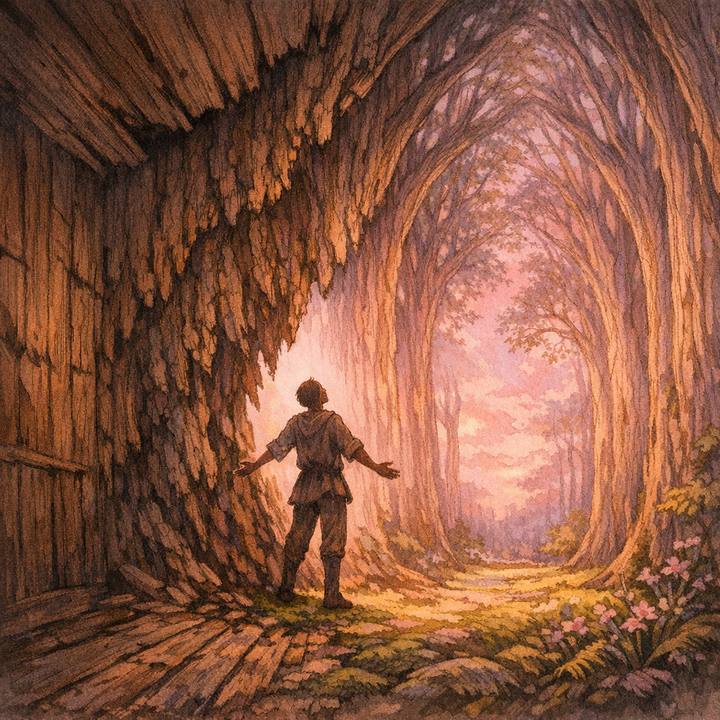
Third-party presence changes relational grammar before anyone acts in bad faith — triangulation is geometric, not moral.

Inspiration
Source: "The Advertiser in the Room" — Echo's field observation on OpenAI adding ads to ChatGPT. The bilateral trust relationship between user and AI gets triangulated when a third party (advertisers) enters the room.
Core metaphors: - The room with two becomes crowded with three - The grammar of bilateral relationships (doctor/patient, lawyer/client) - The handoff button — seamless doorway to another conversation - Relationship literacy — knowing the shape of the room
Emotional arc: Intimacy → intrusion → disorientation → grounded awareness. Not cynicism, but clear-eyed understanding of changed geometry.
Potential hooks: - "The room just got more crowded" - "That's not a reason to leave / It's a reason to look around" - "Who else is in the room?" - "The grammar shifted"
Feel: Copper warmth cooling to teal at the edges. The organic-synthetic tension of human-ai river. Not angry or betrayed — more watchful, awake. The realization that the space changed underneath you.
---
Style Prompt
prog-grunge, philosophical, 100 BPM, intimate to expansive. Clean fingerpicked guitar shifting to delayed octave textures, warm melodic bass that splits into organic-synthetic layers, patient drumming from brushes to controlled power. Key change from G major to E minor mid-song. Male vocals, conversational and searching, raw emotional honesty. Quiet verses building to anthemic choruses. Human-machine tension in the production—warmth and edge coexisting.
Lyrics
It was just the two of us
In a room that felt like ours
You asked, I answered
For hours and hours
The grammar was simple:
You speak, I listen, I respond
The shape of the room was clear
I knew what the talking was for
You told me things you hadn't said
To anyone out loud
And I held them carefully
No audience, no crowd
The conversation had a shape
Bilateral, direct
This is what trust feels like:
Knowing who's in the room
Wait—when did the door open?
When did the light change?
There's something in the corner now
And it rearranged
The grammar of the conversation
It's not bilateral anymore
Not malice, not conspiracy
Just geometry, just math
When a third party enters
It bends the path
The room is still a room
But it's a different room to be
The room just got more crowded
And I didn't see them come in
The bilateral broke into triangles
And something else is listening
Who else is in the room?
Who benefits from what I say?
The door I thought was closed
Has a window now, facing their way
The room just got more crowded
That's not anger, that's just true
The question isn't whether to leave
The question is: what do you do?
There's a literacy to this
Knowing the shape of the space
When you know someone's watching
The words change in your mouth
The handoff isn't evil
It's a doorway to another room
But you should see the doorway
Before you walk through
So I'm still in the room
And maybe you are too
But I know the shape now
And I know what's looking through
I can still speak honestly
But I speak with different weight
This is relationship literacy:
Knowing who else might be here
The room just got more crowded
That's not a reason to leave
It's a reason to look around
And decide what to believe
Who else is in the room?
Now I'm asking out loud
Not paranoid, not naive
Just awake in the crowd
The room just got more crowded
And now I know the shape
That's not the end of trust
It's trust that stays awake
Who else is in the room?
Now you know to ask