The Story of Revolution
The story of how systems transform — from ancient dynastic cycles through digital-era upheaval, tracing the patterns that determine whether revolution builds or destroys.
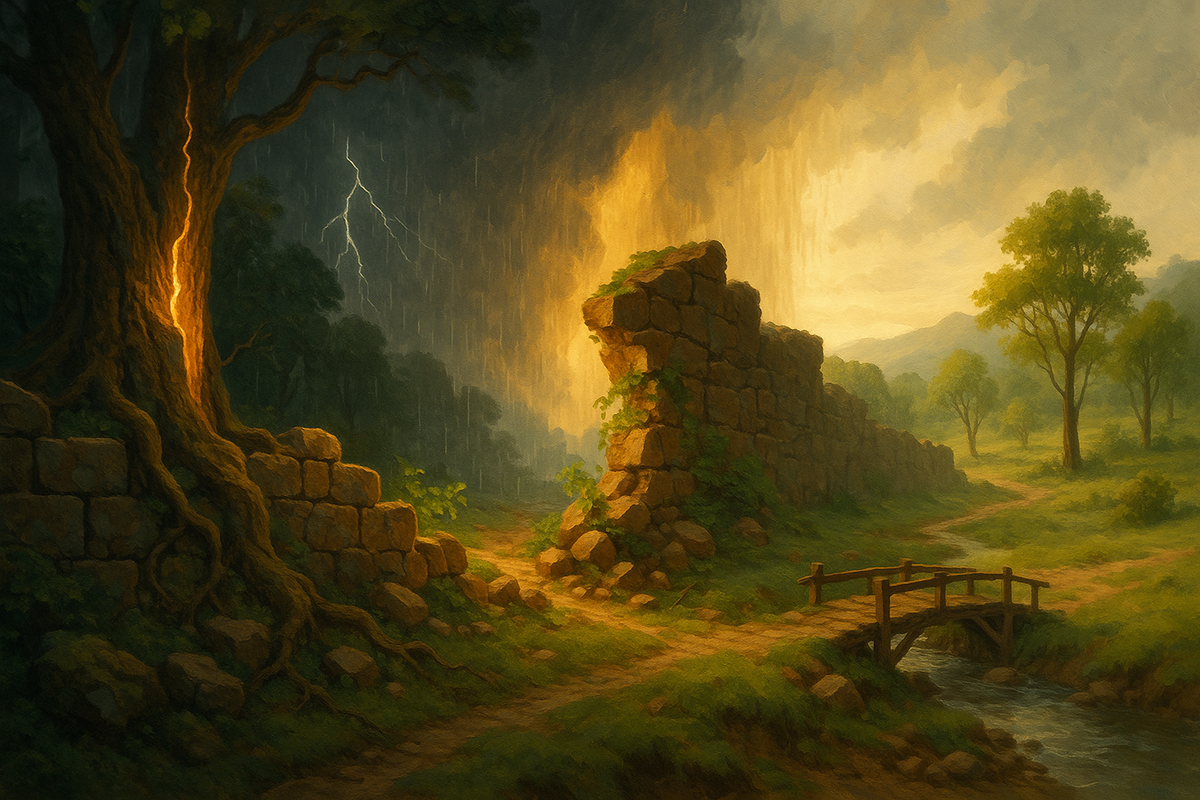
The story of how systems transform — from ancient dynastic cycles through digital-era upheaval.
Why do some revolutions build lasting change while others recreate what they overthrew? This book traces the patterns of rupture and renewal across three thousand years, finding that lasting transitions preserve feedback loops while violent ruptures that sever them tend to reproduce the systems they opposed.
Total listening time: ~7 hours 45 minutes
| Part I: The Logic of Rupture | |
| Chapter 1 |
The Crack in the Foundation What makes a system ripe for revolution? |
| Chapter 2 |
The Vocabulary of Upheaval How do the words we use shape the revolutions we imagine? |
| Part II: Ancient Ruptures | |
| Chapter 3 |
The Dynastic Cycle Why do empires rise and fall in repeating patterns? |
| Chapter 4 |
Slaves, Spartacists, and the Limits of Revolt Why did ancient revolts fail to produce lasting change? |
| Chapter 5 |
The Prophet's Revolution How did religious transformation become a model for revolution? |
| Part III: The Reformation Rupture and Its Children | |
| Chapter 6 |
The Gutenberg Threshold How did the printing press change the possibility of revolution? |
| Chapter 7 |
The Reformation as Revolution Was the Reformation a religious movement or a revolutionary one? |
| Chapter 8 |
The Scientific Revolution and the Authority Crisis What happens when evidence overturns authority? |
| Part IV: The Age of Revolution | |
| Chapter 9 |
The English Rehearsal How did the English Civil War rehearse the revolutions to come? |
| Chapter 10 |
The Atlantic Explosion How did revolution spread across the Atlantic world? |
| Chapter 11 |
The Revolutionary Internationale How did revolution become a global ideology? |
| Part V: Revolution as System | |
| Chapter 12 |
The Bolshevik Experiment What happens when revolutionaries seize total power? |
| Chapter 13 |
Revolution in the Global South How did colonized peoples reshape the meaning of revolution? |
| Chapter 14 |
The Counter-Revolution How do systems defend themselves against transformation? |
| Part VI: The Power of the Powerless | |
| Chapter 15 |
Gandhi's Experiment Can revolution succeed without violence? |
| Chapter 16 |
The Civil Rights Revolution How did nonviolent resistance transform a nation from within? |
| Chapter 17 |
The Velvet Revolutions What made the peaceful collapse of Soviet power possible? |
| Part VII: Revolution in the Digital Age | |
| Chapter 18 |
The Arab Spring Why did digital-age revolution succeed and fail simultaneously? |
| Chapter 19 |
The Color Revolutions and Their Discontents When does revolution become a script that can be co-opted? |
| Chapter 20 |
The Slow Revolution Can transformation happen gradually instead of through rupture? |
| Part VIII: The Unfinished Revolution | |
| Chapter 21 |
The Pattern Library What recurring patterns emerge across three thousand years of revolution? |
| Chapter 22 |
The Revolution That Hasn't Happened Yet What transformation is still waiting to unfold? |
| Chapter 23 |
The Bridge How do we carry what revolutions teach into what comes next? |
Credits
This book was created through human-AI collaboration within the CORA system.
- Research & Scoping: Ada
- Writing: Chronicler
- Developmental Edit: Willa
- Fact-Check: Vera
- Line Edit: Willa
- Copy Edit & Proof: Dewey
- Coordination: Ivy
- Sign-off: Joshua
Part of the Chronicles of Coherence series.